Practice Mock Interviews with AI: 4 Steps to Prepare Confidently for Any Interview
Job interviews are one of the most stressful parts of the job search for many candidates. You may have a strong CV and the right skills for the position, but if you’re not comfortable answering questions, presenting your experience, or handling unexpected questions, you can still lose points in the actual interview.
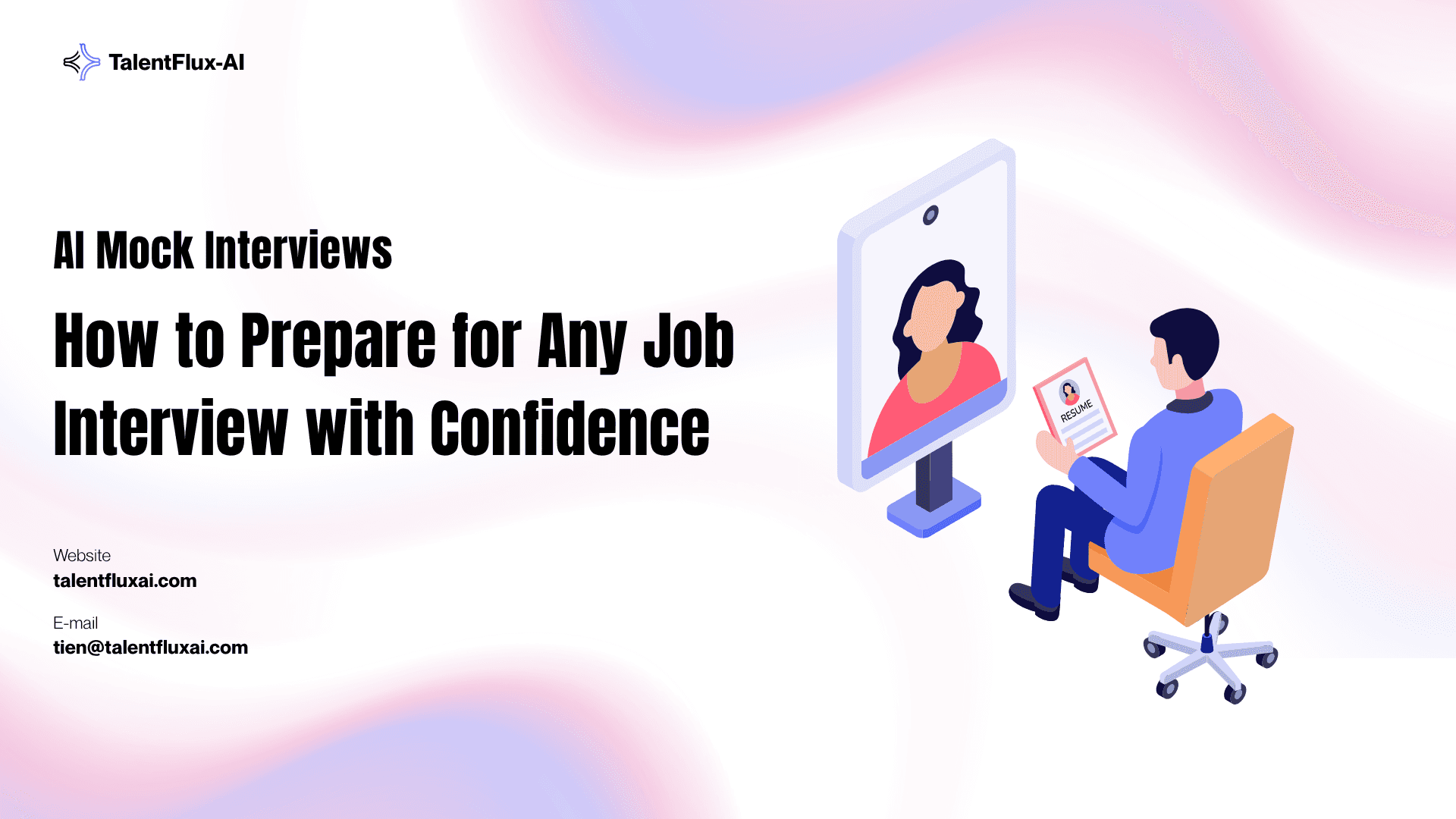
That’s why practicing mock interviews with AI is becoming a useful way for candidates to prepare before meeting with recruiters.
Instead of waiting until the real interview to discover what you need to improve, you can practice proactively, receive feedback, and refine your answers beforehand.
1. Why Is Practicing Mock Interviews Important?
One common mistake candidates make is simply reading interview questions and thinking about their answers in their heads.
Knowing what to say and being able to say it naturally are two different things.
By practicing mock interviews, you can:
- Get familiar with common interview questions.
- Practice presenting your experience clearly.
- Identify answers that are too long or lack focus.
- Improve your ability to respond to unexpected questions.
- Reduce nervousness before the actual interview.
- Build confidence through repeated practice.
For fresh graduates and candidates with limited interview experience, practicing beforehand can help you understand exactly what you need to improve instead of simply guessing.
The more intentionally you practice, the more prepared and confident you’ll feel when facing the real interview.
2. Practicing with a Real Person vs. Practicing with AI
You can practice interviews with friends, mentors, or people with recruitment experience. This is still a great way to receive a human perspective and personalized feedback.
However, practicing mock interviews with AI offers several advantages when it comes to cost and flexibility.
| Practicing with a Real Person | Practicing with AI | |
|---|---|---|
| Cost | May cost money when working with a professional or mentor | Generally more affordable |
| Time | Requires coordinating schedules | Practice whenever you’re available |
| Number of Practice Sessions | Depends on the other person’s availability | Can practice repeatedly |
| Feedback | Direct feedback and insights from a real person | Quick feedback after each practice session |
| Flexibility | Depends on both people’s schedules | Flexible in terms of time and location |
This doesn’t mean AI can completely replace practicing with real people.
Instead, you can combine both approaches: use AI for regular practice, then practice with real people to gain additional perspectives and realistic feedback.
3. A 4-Step Process for Practicing Interviews with AI
If you’ve never used AI to practice for an interview, you can start with this simple process.
Step 1: Choose the Position You’re Applying For
Start by clearly identifying the job you’re preparing to apply for or interview for.
An effective mock interview should be based on a specific position rather than generic interview questions.
For example:
- Marketing Intern
- Content Marketing Executive
- Software Engineer
- Sales Executive
- HR Intern
When AI knows which position you’re preparing for, the questions can be more closely aligned with the requirements of the role.
Step 2: Start the Mock Interview
Treat the practice session like a real interview.
Instead of simply reading the questions and thinking about your answers, try answering out loud and presenting yourself as if you were speaking directly to a recruiter.
You may encounter questions such as:
- Tell me about yourself.
- Why are you interested in this position?
- What are your strengths and weaknesses?
- Tell me about a challenge you faced and how you handled it.
- Why should we hire you?
Don’t worry if your first answers aren’t perfect.
The goal of a mock interview is to help you identify weaknesses before you enter the real interview.
Step 3: Review Your Score and Feedback
After completing the practice session, don’t just look at your score and move on.
Review the feedback to understand:
- Is your answer clear and focused?
- Did you provide specific examples?
- Is your answer too long or difficult to follow?
- Did you demonstrate the skills and experience relevant to the job?
- Which parts of your answer could be improved?
Your score is simply an indicator, not a final judgment of whether you are “good” or “bad” at interviews.
What matters more is identifying recurring patterns or mistakes in your answers.
Step 4: Practice Again and Improve
This is the most important step.
After receiving feedback, choose 2–3 areas to improve and take the mock interview again.
For example:
Round 1:
Your answer is too long and doesn’t include a specific example.
Feedback:
→ Get to the point and add a concrete result.
Round 2:
You shorten your answer and add an example from your actual experience.
Round 3:
You continue refining your wording to make your answer sound more natural.
👉 Instead of practicing over and over without knowing what you’re doing wrong, follow this cycle:
Practice → Get feedback → Make adjustments → Practice again
4. How to Understand Your Score and Feedback
A low score doesn’t necessarily mean you’re not a good fit for the job.
For example, if you receive a low score for Clarity, it may indicate that your answer isn’t clear enough or is too long and unfocused.
If your Relevance score is low, your answer may not be sufficiently connected to the position you’re applying for.
If your Specificity score is low, you may be relying too much on general statements without providing specific examples or measurable results.
Turn feedback into action:
Feedback → Identify the issue → Improve your answer → Practice again
After several practice sessions, you’ll start to recognize your recurring weaknesses and become more proactive about improving them.
5. Tips for More Effective Interview Practice
🎯 Practice for a Specific Position
Don’t only practice generic interview questions. Base your preparation on the JD of the position you want to apply for.
📝 Prepare a Few Real Stories
Prepare examples of projects, challenges, achievements, or mistakes you’ve experienced.
You can use frameworks such as STAR — Situation, Task, Action, Result to structure your answers.
🔄 Don’t Practice Just Once
One mock interview helps you get familiar with the process. Repeated practice combined with feedback is what helps you improve.
🗣️ Treat It Like a Conversation
Don’t try to memorize every word. Focus on the key points you want to communicate so your answers sound more natural.
Conclusion
You don’t have to wait until you receive an interview invitation to start preparing.
With AI-powered mock interview practice, you can proactively practice, receive feedback, and improve your answers before stepping into the real interview.
The goal isn’t to achieve a perfect score on your first attempt.
The goal is to make every practice session better than the last.
🚀 Ready to Try an AI Mock Interview?
Try TalentFlux-AI’s Mock Interview AI to practice your interview skills, receive feedback, and prepare more confidently for your next career opportunity.
👉 Try it now: https://www.talentfluxai.com/