Why Is Your CV Not Getting Responses? 8 Common Mistakes and How to Fix Them
The Truth About How Long Recruiters Spend Reading a CV
There is no fixed amount of time that every recruiter spends reviewing a CV. The process can vary depending on the company, number of applicants, screening process, and whether an ATS is used.
Instead of focusing on a specific number of seconds, ask yourself:
Can a recruiter quickly find the information they need from your CV?
Your CV should make it easy to identify:
- The position you’re applying for
- Relevant experience
- Key skills
- Achievements and results
- Important information at a glance
The goal is not to include as much information as possible, but to highlight the information that is most relevant to the role.
8 Common CV Mistakes and How to Fix Them
1. Using the Wrong or Missing Keywords
If your CV doesn’t include relevant keywords from the job description, it may be harder for an ATS or recruiter to identify your qualifications.
How to fix it:
Read the job description carefully and naturally include relevant skills, tools, qualifications, and job-related terms that genuinely match your experience. Avoid keyword stuffing.
2. Using the Same CV for Every Job
Different positions have different requirements. Sending exactly the same CV to every company can make your application feel less relevant.
How to fix it:
Tailor your CV to each job description. Highlight the experience and skills that are most relevant to the specific position.
3. Including Too Much Irrelevant Information
A longer CV is not necessarily a stronger CV. Too much information can make it harder for recruiters to find what actually matters.
How to fix it:
Prioritize relevance over quantity. Remove outdated, repetitive, or unrelated information and focus on what supports your application.
4. Listing Responsibilities Without Showing Results
Simply describing what you did doesn’t always show the impact of your work.
For example:
❌ Managed social media accounts.
✅ Created 3–5 social media posts per week, generating 90K+ views.
How to fix it:
Whenever possible, use numbers, percentages, targets, or measurable achievements to show the results of your work.
5. Using a Messy or Difficult-to-Read Format
Overly complicated designs, inconsistent formatting, graphics, images, or tables can make a CV harder to read and may create problems for some ATS systems.
How to fix it:
Keep your CV clean and consistent. Use clear headings, readable fonts, consistent spacing, and a simple structure.
6. Hiding Your Strongest Points
Recruiters should not have to search through your entire CV to find your most relevant skills or achievements.
How to fix it:
Make your key strengths easy to spot. Put relevant skills, achievements, experience, tools, and certifications where they can be quickly found.
7. Writing Generic Experience Descriptions
Phrases like “hard-working,” “responsible,” or “good communication skills” don’t provide much evidence on their own.
How to fix it:
Show rather than tell. Use specific examples that demonstrate how you applied a skill and what you achieved.
8. Not Checking Your CV Before Sending It
Small mistakes can make your application look less polished.
How to fix it:
Before submitting your CV, check:
- Spelling and grammar
- Contact information
- Portfolio and LinkedIn links
- Employment dates
- Company and job titles
- File name
- Formatting consistency
- Whether you’re sending the correct version
CV Checklist Before You Apply
Before hitting “Apply,” take a quick look at your CV:
✅ Relevance
- Does my CV match the job description?
- Have I highlighted the right skills and experience?
✅ Keywords
- Have I identified the important keywords in the job description?
- Are they used naturally in my CV?
✅ Evidence
- Have I included numbers or measurable results?
- Do I show evidence of my skills instead of simply listing them?
✅ Readability
- Is my CV easy to scan?
- Can a recruiter quickly find the most important information?
✅ Final Check
- Are there any spelling or grammar mistakes?
- Do all links work?
- Is the information consistent?
- Am I sending the correct CV version?
Don’t Just Send Your CV and Wait
Before sending your next application, consider using a CV feedback tool to identify potential issues.
An AI CV feedback tool can help you review areas such as:
- JD and CV fit
- Missing keywords
- Lack of specific examples
- Missing achievements or measurable results
- Readability and formatting
Remember, feedback is a guide—not a final verdict. Use it to identify areas you can improve before submitting your application.
🚀 Ready to Improve Your CV?
Don’t just apply more. Apply smarter.
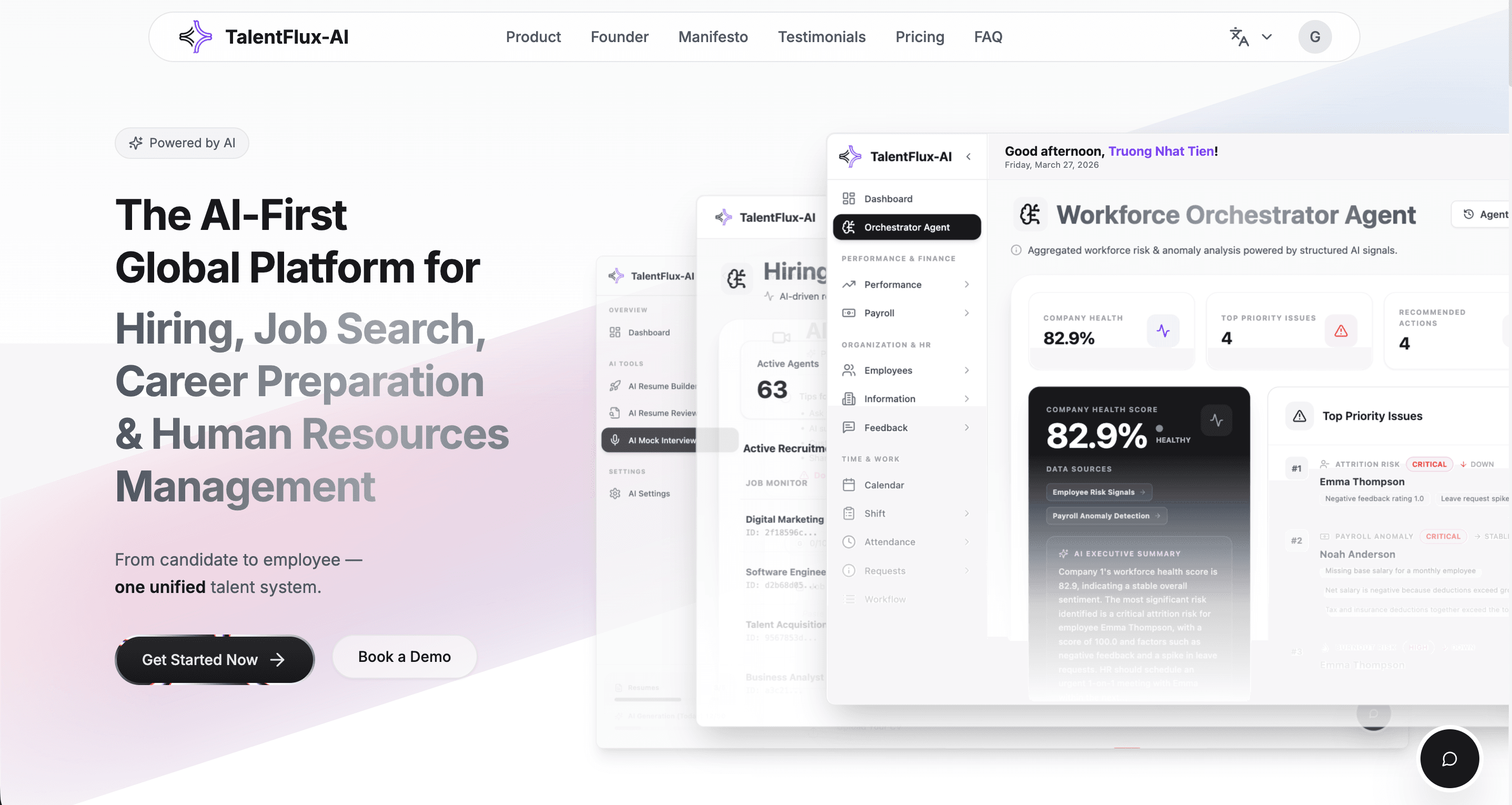
Use TalentFlux-AI’s AI tools to check your CV, get feedback, and identify areas to improve before sending your application.
👉 Check your CV, improve your application, and apply with more confidence.
Try TalentFlux-AI now https://www.talentfluxai.com